Gyeongju isn't just Korea's "museum without walls." It's a place where time layers itself into every stone pagoda and burial mound, where mornings arrive with temple bells instead of traffic noise, and where you can sleep beneath a traditional curved roof after wandering the same grounds that Silla Dynasty royalty walked over a millennium ago.
Quick View: 3-Line Highlights
📍 Gyeongju (경주) is South Korea's premier UNESCO heritage destination with 8 inscribed sites including Bulguksa Temple and the royal burial mounds.
🏯 Hanok stays near these sites combine cultural immersion (ondol floors, traditional breakfasts, architectural heritage) with walking-distance access to world-class historical monuments.
💰 Accommodation ranges from USD $40 (KRW ₩54,000) budget guesthouses to USD $180 (KRW ₩243,000) luxury stays with full heritage experiences.
Why Gyeongju Demands More Than a Day Trip
When I first visited Gyeongju after living 15 years in Sydney, the sheer density of historical layers reminded me of wandering through Rome. But unlike Rome, Gyeongju offers something that felt more intimate: the chance to actually sleep inside that history.
In Australia, heritage accommodation often means a renovated Victorian hotel with modern plumbing. In Gyeongju, staying in a hanok near Bulguksa (불국사) or Daereungwon (대릉원) means waking up on a heated ondol floor (온돌), stepping into a courtyard framed by pine trees and clay-tiled roofs, and realizing that the architecture around you has served travelers for centuries.

The city's UNESCO World Heritage designation includes Bulguksa Temple, Seokguram Grotto (석굴암), and the Gyeongju Historic Areas (royal tombs, observatories, and palace ruins). But what struck me most was how these sites aren't fenced off from daily life. You can walk from your hanok guesthouse to a 7th-century astronomical observatory before breakfast, and that proximity transforms how you experience the place.
Understanding Gyeongju's UNESCO Sites (And Where to Stay Near Them)
The Three Main Heritage Zones
1. Bulguksa Temple & Seokguram Grotto (불국사 / 석굴암)
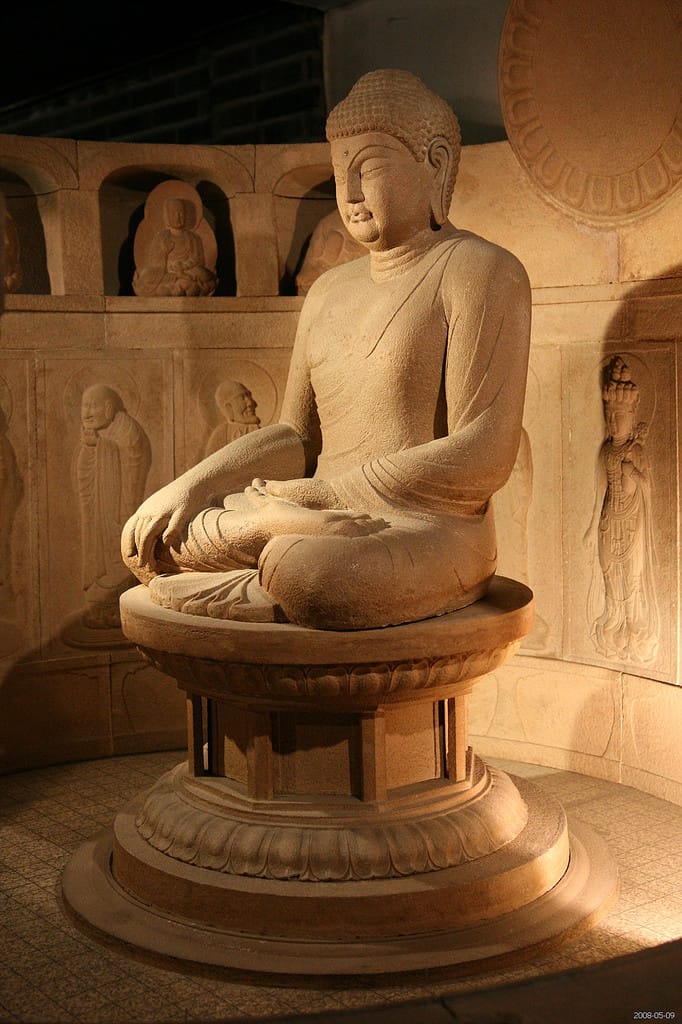
Located on the slopes of Mt. Toham (토함산), these are Gyeongju's most iconic sites. Bulguksa is a masterpiece of Silla Dynasty (57 BCE – 935 CE) Buddhist architecture with stone bridges, pagodas, and prayer halls. Seokguram, perched 750 meters above sea level, houses a serene granite Buddha statue inside a man-made grotto designed with advanced acoustics and natural light.
2. Daereungwon Tomb Complex (대릉원)
In the heart of Gyeongju city, this park contains 23 royal burial mounds dating from the 5th-6th centuries. You can actually walk inside Cheonmachong (천마총), the only tomb open to visitors, and see the gold crowns and celestial horse painting that gave it its name.
3. Gyochon Hanok Village (교촌한옥마을)
A preserved neighborhood of traditional Korean houses built during the Joseon Dynasty. It's the most atmospheric area to stay if you want to be within walking distance of both historical sites and modern cafes along Hwangnidan-gil (황리단길).

Joshua's Real Story: When "Heritage" Becomes Everyday
Living in Sydney, I got used to heritage buildings being behind velvet ropes or glass cases. The historic Rocks district is beautiful, but you experience it as a tourist, not a participant.
Gyeongju taught me something different. On my first night in a hanok near Gyochon, the guesthouse host (an elderly woman in her 70s) brewed me a cup of barley tea and explained that her family had maintained this house for three generations. The wooden beams above my head had been carved during the same era that Australians were still drawing boundary lines for sheep stations.
The next morning, I walked 10 minutes to Cheomseongdae Observatory (첨성대), built in 632 CE — the oldest surviving astronomical observatory in East Asia. There were no crowds at 7 a.m., just early light on stone and the realization that this wasn't a "museum visit." It was daily geography.
Best Hanok Stays by Location & Experience Level
Budget-Friendly: Gyochon Area (교촌 지역)
📍 Hanok Moonstay (한옥문스테이)
Location: 362-9 Gyochon-dong, Gyeongju
Price: USD $45 (KRW ₩60,750) per night
Why it matters: Walking distance to Gyochon Village, Daereungwon, and local restaurants. Basic but clean ondol rooms with shared bathrooms.
Best for: Solo travelers and budget-conscious couples who want authentic heritage atmosphere without luxury pricing.
Practical tip: Book the courtyard-facing room for sunrise views over traditional rooftops.

Mid-Range: Near Bulguksa Temple (불국사 인근)
📍 Hanok Stay Seowa (한옥스테이서화)
Location: 15-1 Jinhyeon-dong, Gyeongju (5 min walk to Bulguksa)
Price: USD $90 (KRW ₩121,500) per night
Why it matters: Private ondol rooms with en-suite bathrooms. Traditional breakfast (homemade soybean paste soup, grilled fish, seasonal banchan) included.
Best for: Families and travelers who want comfort alongside cultural immersion.
Practical tip: The host offers free guided walks to Bulguksa's back trails where locals meditate.
Joshua's Insight: The breakfast experience here is a window into 'jeong' (정) culture — the Korean concept of affection and hospitality that builds slowly through shared meals and quiet presence. In Sydney, breakfast at a guesthouse was transactional. Here, the host sat with us, asked about our plans, and packed extra rice cakes for our temple hike.
Luxury: Heritage Experience (프리미엄 한옥)
📍 Rakkojae Gyeongju (락고재 경주)
Location: 85 Poseok-ro, Gyeongju (near Woljeonggyo Bridge)
Price: USD $180–280 (KRW ₩243,000–378,000) per night
Why it matters: Museum-quality hanok with antique furniture, private courtyards, and in-room tea ceremonies. UNESCO-level preservation standards.
Best for: Honeymooners, cultural enthusiasts, and travelers seeking a once-in-a-lifetime heritage stay.
Practical tip: Request the "Silla Suite" — it features a traditional Korean bath (욕조) carved from a single tree trunk.

What to Expect in a Hanok Stay: A First-Timer's Guide
Ondol Floors (온돌) – Korea's Radiant Heating
Ondol is a traditional underfloor heating system where heat radiates from beneath stone or clay floors. You'll sleep on a thin cotton mattress (요) directly on the warm surface. It takes one night to adjust, but by morning two, most travelers describe it as the best sleep they've had in Korea.
Pro Tip: If you have back issues, ask your host for extra padding. Most hanoks provide adjustable bedding thickness.
Shared vs. Private Facilities
Budget hanoks often have shared bathrooms (clean, but communal). Mid-range and luxury stays offer private en-suite facilities with modern fixtures. All hanoks require removing shoes before entering rooms — you'll be given indoor slippers.
Traditional Breakfast (한정식 조식)
Expect a spread of 5–10 small dishes: steamed rice, soybean paste soup (된장찌개), grilled fish, kimchi, seasoned vegetables, and sometimes a soft tofu dish. Coffee is rare; barley tea (보리차) or green tea is standard. If you're vegetarian, notify your host 24 hours in advance.
Joshua's Recommended One-Day Heritage Itinerary (Starting from Gyochon Hanok)
7:00 AM – Wake naturally with morning light through paper windows (한지). Traditional hanoks have minimal curtains, so sunrise becomes your alarm.
7:30 AM – Walk to Cheomseongdae Observatory (15 min / 1.2 km). The stone tower looks best in soft morning light with few tourists.
8:30 AM – Return for traditional breakfast at your hanok. Take your time — this meal is designed to be savored slowly.
10:00 AM – Taxi or bus to Bulguksa Temple (20 min / 12 km). Arrive before tour groups. Explore the stone bridges (Cheongungyo, Baegungyo), Daeungjeon Hall, and Seokgatap Pagoda.
12:30 PM – Lunch at temple-adjacent restaurants. Try sanchae bibimbap (mountain vegetable rice bowl) — a specialty of the Bulguksa area.
2:00 PM – Hike to Seokguram Grotto (4.5 km uphill / 90 min walking trail, or 10 min by shuttle bus). The Buddha statue inside is stunning, though photography is prohibited.
4:00 PM – Return to Gyeongju city. Visit Daereungwon Tomb Complex for late afternoon light over the burial mounds. Entry fee: USD $2.50 (KRW ₩3,000).
6:30 PM – Dinner at Hwangnidan-gil (황리단길), Gyeongju's trendy café and restaurant street. Try Gyeongju Hanjeongsik (경주한정식) for a multi-course royal meal, or grab casual ssambap (lettuce wraps with grilled pork).
8:00 PM – Evening stroll through Woljeonggyo Bridge (월정교), beautifully illuminated after dark. It's a reconstructed Silla Dynasty bridge over a stream, now a popular photo spot.
9:00 PM – Return to hanok. Many guesthouses offer evening tea service in the courtyard. End the day beneath traditional eaves, listening to pine branches.

Comparison Table: Gyeongju Heritage Accommodation vs. Sydney Heritage Stays
Practical Survival Tips for Hanok Stays in Gyeongju
1. Pack Light & Bring Socks
Hanok rooms have minimal furniture — you'll store luggage in a closet or corner. Since you'll be removing shoes frequently, bring clean socks to wear indoors.
2. Learn Basic Hanok Etiquette
- Sliding Doors (미닫이): Close gently. These are traditional paper-and-wood frames that can tear.
- Quiet Hours: Hanoks have thin walls. Sound carries, especially at night.
- Shoes Off Everywhere: Even in shared hallways.
3. Book Ahead for Peak Seasons
Gyeongju sees heavy domestic tourism during cherry blossom season (late March–early April) and autumn foliage (late October–early November). Hanok stays fill up 2–3 months in advance.
4. Public Transport & Taxi Apps
Gyeongju Station (경주역) connects to Busan and Seoul via KTX. Use Kakao T for taxis (English interface available). Buses to Bulguksa run every 20–30 minutes from downtown.
5. Vegetarian & Halal Accommodations
Most hanok hosts can accommodate dietary restrictions with advance notice. Bulguksa area has temple food restaurants serving vegan Buddhist cuisine (사찰음식).
Planning Your Stay in Gyeongju?
Looking for a place to stay in Gyeongju (경주)?
From traditional hanok guesthouses near UNESCO sites to modern hotels in the city center, find your perfect base for exploring Korea's ancient capital.
View All Gyeongju Accommodations on Agoda*Browse 300+ hotels and hanok stays in Gyeongju. Prices from USD $40 (KRW ₩54,000) per night.
Traveler's FAQ
Q1: Do I need to speak Korean to stay in a hanok?
Most hanok hosts near major sites speak conversational English or use translation apps like Papago. Booking platforms (Agoda, Booking.com) also provide messaging features in English.
Q2: Are hanok stays suitable for families with young children?
Yes, but be mindful of stairs (many hanoks have elevated wooden platforms) and the lack of railings. Ondol floors are safe and cozy for kids. Request extra padding if needed.
Q3: What's the difference between a hanok and a regular guesthouse?
A hanok is a traditional Korean house built with wood, clay, and paper windows (한지). It follows architectural principles of harmony with nature (배산임수 — mountains behind, water in front). Regular guesthouses are modern buildings with standard hotel layouts.
Author Bio
Joshua is a Seoul-based writer who spent 15 years in Sydney, Australia. He writes about Korean heritage, travel, and cultural immersion through a cross-cultural lens shaped by life between East and West. His work focuses on helping international travelers navigate Korea's layers of history and daily life with practical insight.
Legal Disclosure & Transparency
Image Attribution:
Images used in this article are sourced from copyright-free platforms (Unsplash, Wikimedia Commons, Pexels) under Creative Commons licenses or are official tourism materials. All rights belong to their respective creators. If you are a rights holder and wish to have an image removed, please contact Joshua at mieluartkor@gmail.com for prompt removal.
Affiliate Disclosure:
This article contains affiliate links to Agoda. If you book accommodation through these links, KR Snap may earn a small commission at no additional cost to you. This helps support independent travel writing. All recommendations are based on genuine research and personal experience.
Related Guides
Explore more about Korean heritage and travel:
- K-Culture – Understand Korea's cultural layers and etiquette
- Hot Spots – Discover hidden travel destinations beyond Seoul
- Travel Tips – Transportation, apps, and practical survival guides
- K-Food – Korean cuisine deep dives and regional specialties
- Stay – More accommodation guides across Korea


Comments
Post a Comment
"Welcome to KR Snap! Feel free to ask any questions about South Korea or share your thoughts."