Boutiques, Bars & Nightlife
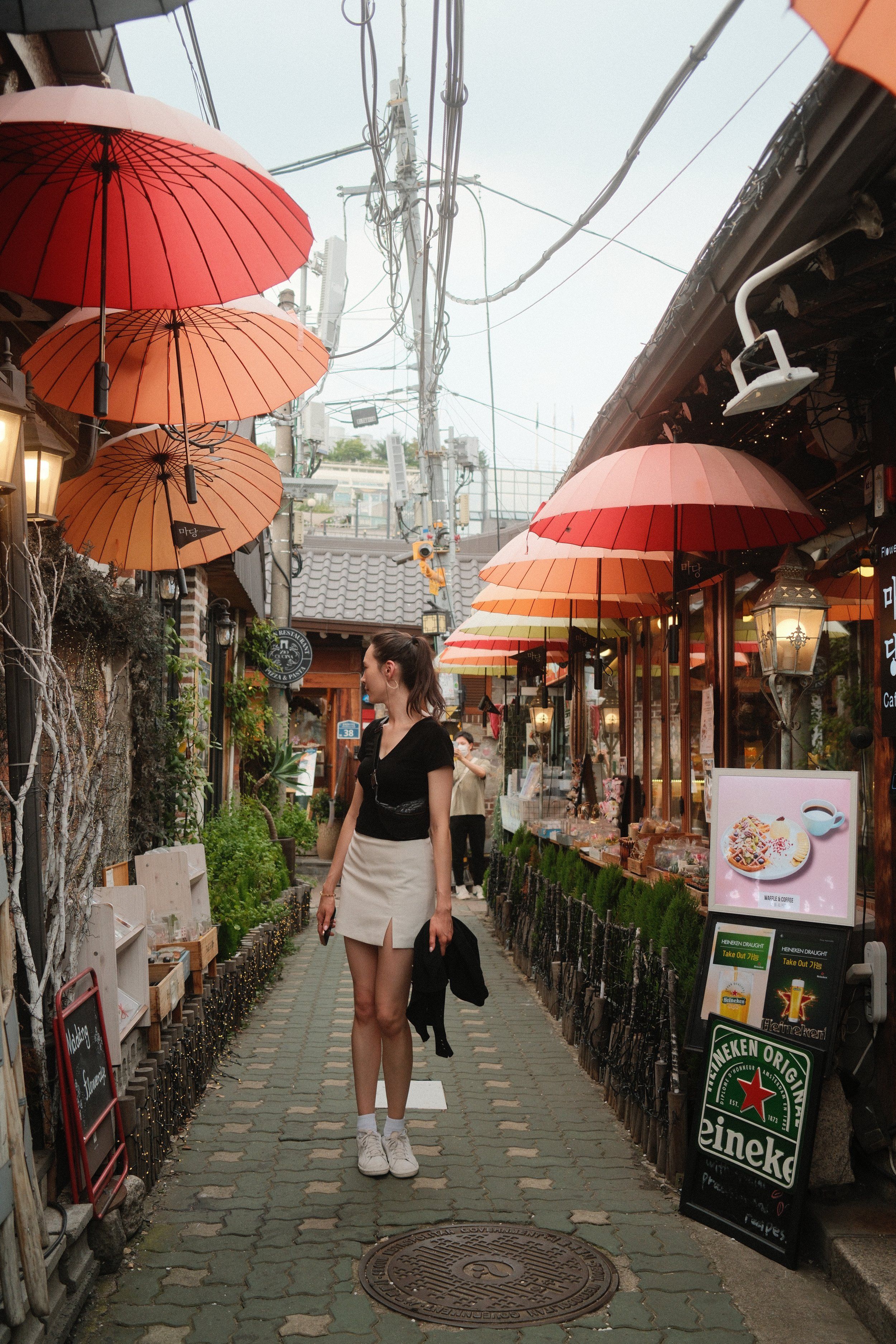
Beyond cafés, Ikseon-dong transforms at dusk into a cultural playground. Here's what you'll find:
🛍️ Indie Boutiques
- Handcrafted ceramics from local artisans (USD $20–50 / KRW ₩27,000–67,500)
- Vintage Korean textiles and embroidered pojagi (보자기, wrapping cloths)
- Small-batch skincare using traditional ingredients like rice water and green tea
- Artisan jewelry featuring Korean traditional motifs (매듭, maedeup knots)
🍸 Cocktail Bars & Nightlife
- Makgeolli bars serving traditional rice wine in modern glassware (USD $8–12 / KRW ₩10,800–16,200 per glass)
- Rooftop lounges with views over hanok rooftops and Seoul Tower in the distance
- Speakeasy-style spots hidden behind unmarked doors—look for the small brass plaques
- Jazz bars in converted hanok basements with live performances on weekends
Pro Tip: Most bars open after 6 PM and stay open until midnight on weekdays, 2 AM on weekends. Fridays and Saturdays get crowded after 9 PM—arrive by 7:30 PM to secure rooftop seating.
Comparing Ikseon-dong vs. Bukchon
Joshua's Take: If Bukchon is Seoul's Paddington (elegant but heavily touristed), Ikseon-dong is its Newtown—edgy, creative, and still discovering itself. Both are worth visiting, but Ikseon-dong feels more like a living neighborhood rather than an open-air museum.
Joshua's Recommended One-Day Itinerary
Morning (10:00 AM – 12:00 PM)
Start: Jongno 3-ga Station (종로3가역) Exit 4 → 5-minute walk to Ikseon-dong entrance
First Stop: Café Onion Anguk for buttery pastries and rooftop photos (30–45 min)
Activity: Wander the narrow alleys and photograph hanji doors with morning light filtering through
Walking time: Only 3–5 minutes between major cafés thanks to the compact grid
Afternoon (12:00 PM – 3:30 PM)
Lunch: Explore Korean BBQ Alley just outside the hanok zone on Donhwamun-ro (돈화문로)
- Try pork belly (삼겹살, samgyeopsal) or marinated beef ribs (갈비, galbi)
- Price: USD $12–18 / KRW ₩16,200–24,300 per person
Post-Lunch Activity: Browse indie boutiques for ceramics, textiles, and handmade soaps
Second Café Stop: Café Bidam for a quiet yujacha latte break (1 hour)
Transit Tip: If you want to visit nearby Changdeokgung Palace (창덕궁), it's a 10-minute walk west. Secret Garden tours require advance booking.
Late Afternoon & Evening (4:00 PM – 8:00 PM)
4:00 PM: Return to Ikseon-dong and explore tea houses serving traditional Korean teas
- Try ssanghwa-cha (쌍화차, herbal medicinal tea) or omija-cha (오미자차, five-flavor berry tea)
- Price: USD $5–8 / KRW ₩6,750–10,800
6:00 PM: Watch the sunset from a rooftop bar as traditional lanterns light up
- Golden hour timing: 6:30 PM in winter, 7:30 PM in summer
7:00 PM: Dinner at a fusion Korean tapas restaurant inside a renovated hanok
- Recommended dishes: Korean-style charcuterie board, kimchi carbonara, makgeolli cocktails
- Price: USD $25–40 / KRW ₩33,750–54,000 per person
8:00 PM: Stroll back through illuminated alleys to Jongno 3-ga Station
Total Walking Distance: Approximately 2 km (1.2 miles) – entirely walkable in comfortable shoes
Traveler's FAQ
Q1: Is Ikseon-dong suitable for families with children?
Yes, but be mindful that the narrow alleys can feel crowded on weekends. Visit on weekday mornings (10 AM – 12 PM) for a more relaxed pace. Most cafés welcome children, though some boutique cocktail bars are adult-focused (18+ after 6 PM).
Q2: Can I wear hanbok (한복) in Ikseon-dong like in Bukchon?
Absolutely! Several hanbok rental shops operate near Jongno 3-ga Station and Anguk Station. Rental cost: USD $15–25 / KRW ₩20,250–33,750 for 2–4 hours. The narrow lanes and traditional doors make for stunning Instagram photos. Many cafés offer free entry or discounts to hanbok wearers.
Q3: What's the best time to avoid crowds?
Weekday mornings (10 AM – 12 PM) offer the quietest experience. Avoid Saturday afternoons (2–6 PM) and Sunday evenings (5–8 PM) when local crowds and international tourists peak. Rain days are surprisingly peaceful—bring an umbrella and enjoy the reflections on wet stone paths.
Q4: Are credit cards widely accepted?
Most cafés and restaurants accept credit cards, but some small boutiques and street vendors prefer cash. Withdraw Korean won (₩) from ATMs at Jongno 3-ga Station (convenience store ATMs charge lower fees than bank ATMs).
Q5: How long should I budget for Ikseon-dong?
A thorough visit takes 3–4 hours (2 cafés, lunch, shopping). If combining with Bukchon or Changdeokgung Palace, allocate a full day (8 hours).
Where to Stay Near Ikseon-dong
Finding the perfect stay near Ikseon-dong?
Browse the curated list of high-quality hotels, guesthouses, and hanok stays in Seoul's Jongno district on the official Agoda Seoul page.
Explore Accommodations in Seoul*Direct access to official Agoda listings for Seoul, South Korea. Prices in Jongno area typically start from USD $40 (KRW ₩54,000) per night for guesthouses and USD $80–150 (KRW ₩108,000–202,500) for boutique hotels.
Recommended Accommodation Types Near Ikseon-dong
Budget-Friendly (USD $30–60 / KRW ₩40,500–81,000)
- Guesthouses in Jongno and Insadong neighborhoods
- Capsule hotels near Jongno 3-ga Station
- Walking distance: 5–10 minutes to Ikseon-dong
Mid-Range (USD $80–150 / KRW ₩108,000–202,500)
- Boutique hotels with hanok-inspired design
- Modern hanok stays with ondol floors and Western amenities
- Walking distance: 3–7 minutes to Ikseon-dong
Luxury (USD $200+ / KRW ₩270,000+)
- Rakkojae Seoul (락고재 서울) in Bukchon – authentic hanok experience with museum-quality interiors
- The Shilla Seoul (신라호텔) on Namsan Mountain – 15-minute taxi to Ikseon-dong
Practical Travel Tips for Ikseon-dong
Getting There
From Incheon Airport:
- Airport Railroad Express (AREX) to Seoul Station → Transfer to Line 1 → Jongno 3-ga Station (60 min total)
- Cost: USD $10 / KRW ₩13,500
From Gimpo Airport:
- Line 5 (Purple Line) to Gwanghwamun → Transfer to Line 5 → Jongno 3-ga (35 min)
- Cost: USD $2 / KRW ₩2,700
Survival Korean Phrases
- "Americano juseyo" (아메리카노 주세요): One Americano, please
- "Hwajangshil eodi-eyo?" (화장실 어디에요?): Where is the restroom?
- "Gyesan-seo juseyo" (계산서 주세요): Check, please
- "Sajin chwaedo dwaeyo?" (사진 찍어도 돼요?): May I take a photo?
Cultural Etiquette
- Remove shoes when entering traditional hanok spaces (some cafés provide slippers)
- Speak softly in residential alleys—many hanok are still private homes
- Ask permission before photographing shopkeepers or café interiors
- Trash disposal: Carry a small bag—public trash cans are rare in Seoul
Related Guides on KR Snap
Hungry for more authentic Korean experiences? Explore our curated guides:
K-Food – Discover Seoul's best street food markets and hidden local restaurants
Hot Spots – Explore Seongsu-dong, Seoul's Brooklyn, and other trending neighborhoods
K-Culture – Learn traditional tea ceremony etiquette and hanbok wearing tips
Travel Tips – Master Seoul's subway system, T-money cards, and essential apps
Legal Disclosure & Transparency
Copyright Notice: All images used in this article are sourced from copyright-free platforms (Wikimedia Commons, official tourism boards, Creative Commons-licensed sources, or journalist/blogger archives used under Fair Use) for educational and informational purposes. Full credit is given to original photographers and sources as listed in image captions. If you are a rights holder and wish to have an image removed, please contact Joshua at mieluartkor@gmail.com for prompt removal.
Affiliate Disclosure: This blog may contain affiliate links to Agoda and other booking platforms. If you make a purchase through these links, KR Snap may earn a small commission at no additional cost to you. This helps support the creation of free travel content. All recommendations are based on Joshua's personal experience and independent research—no brands paid for placement in this article.
Accuracy Statement: All prices, operating hours, and location data were verified as of March 2026. Please check official websites or call ahead for the most current information, as café operating hours and prices may change.


Comments
Post a Comment
"Welcome to KR Snap! Feel free to ask any questions about South Korea or share your thoughts."