Introduction
Booking accommodation in Seoul can feel like navigating a maze. International platforms show inflated prices, Korean-only websites offer better deals but require local knowledge, and hidden fees appear at checkout. For first-time visitors, the process is confusing and expensive.
I'm Joshua, a Seoul-based writer who spent 15 years living in Sydney, Australia. When I first moved back to Korea, I made every booking mistake possible. I paid tourist prices for hotels that locals booked for 30% less. I lost deposits due to misunderstanding cancellation policies. I learned the hard way that booking accommodation in Seoul requires a different strategy than booking in Western cities.
In Sydney, I could trust Booking.com or Airbnb to give me the best price. In Seoul, those platforms are often the most expensive option. Korean travelers use apps like Yanolja and Goodchoice—platforms you've probably never heard of—to find deals that never appear on international sites.
This guide will teach you how to book like a local, avoid hidden fees, maximize your budget, and secure the best accommodation for your Seoul trip without overpaying.
Quick View: 3-Line Highlights
Korean booking platforms (Yanolja, Goodchoice) often offer 20-40% lower prices than international sites like Booking.com or Agoda.
Book 2-3 months in advance for major holidays (Chuseok, Lunar New Year, cherry blossom season) to avoid 50% price surges.
Read cancellation policies carefully—Korean hotels often charge stricter penalties than Western properties, especially for non-refundable rates.
1. Understanding Seoul's Booking Ecosystem
Most Western travelers instinctively open Booking.com, Expedia, or Airbnb when planning a Seoul trip. These platforms are convenient, but they come with a hidden cost: markup fees.
Korean domestic platforms like Yanolja (야놀자) and Goodchoice (여기어때) aggregate hotels, guesthouses, and motels at significantly lower prices because they negotiate directly with Korean properties without international middleman fees.
Price Comparison Example (3-star hotel in Myeongdong, mid-week in March):
The same room can vary by ₩40,000-₩45,000 (approximately $30-35 USD) per night depending on where you book.
2. Best Booking Platforms for International Travelers
For English Speakers: Hybrid Strategy
If you don't read Korean, you'll need a combination of international and Korean platforms to find the best deals.
Pros:
- Largest selection of Seoul hotels
- English interface and customer service
- Free cancellation on many properties
- No upfront payment for most bookings
Cons:
- Prices are 15-30% higher than Korean platforms
- Some Korean guesthouses don't list here
Joshua's Tip: Use Booking.com to research properties and read reviews, then check if the same hotel has a direct booking website or appears on Korean apps at a lower price.
Agoda (Best for: Last-Minute Deals)
Pros:
- Strong presence in Asia
- Frequent flash sales and discount codes
- Good selection of budget hostels
Cons:
- Customer service can be slow
- Cancellation policies are strict
Airbnb (Best for: Apartments & Long Stays)
Pros:
- Great for week-long stays
- Access to entire apartments
- Local neighborhood experiences
Cons:
- Short-term rentals (under 30 days) in residential buildings are technically restricted in Korea
- Prices don't include cleaning fees and service charges until checkout
- Less reliable than hotels (host cancellations do happen)
Legal Note: Korea restricts short-term rentals in residential zones. Many Airbnb hosts operate in legal grey areas. Book with Superhosts who have hundreds of reviews to minimize risk.

3. Using Korean Booking Apps (Even If You Don't Speak Korean)
Yanolja (야놀자): Korea's Booking Giant
Yanolja is Korea's most popular accommodation booking app, offering hotels, motels, guesthouses, and even pension stays (vacation rentals).
How to Use Yanolja as an English Speaker:
- Download the Yanolja app (App Store / Google Play)
- Enable English language in settings (limited but functional)
- Use Google Translate's camera feature to translate Korean listings
- Payment: International credit cards are accepted
Why Use It: Prices are consistently 20-40% lower than Booking.com for the same properties.
Downside: Customer service is primarily in Korean. If issues arise, communication can be challenging.
Goodchoice (여기어때): Budget-Friendly Alternative
Similar to Yanolja but often features even cheaper motels and love hotels (which are perfectly safe and clean, despite their name).
4. Timing Your Booking: When to Book for Best Prices
Peak Season vs. Off-Season Pricing
Seoul accommodation prices fluctuate dramatically based on season and Korean holidays.
Peak Seasons (Book 2-3 Months in Advance):
- Cherry Blossom Season (late March - early April): Prices increase 30-50%
- Chuseok (Korean Thanksgiving, mid-September): Hotels near train stations sell out entirely
- Lunar New Year (late January - early February): Prices double in some areas
- Summer Vacation (July-August): Family-friendly hotels and beach areas see surges
Off-Peak Seasons (Book 2-4 Weeks in Advance):
- Late November - mid-December
- Mid-January - early March (excluding Lunar New Year)
- Late May - mid-June
Last-Minute Bookings: Korean platforms like Yanolja offer "tonight deals" (오늘특가) that can save 30-50% if you book same-day. This works well for flexible travelers but is risky during peak season.
5. Hidden Fees and What to Watch For
Common Hidden Costs
Korean accommodation pricing can include unexpected charges that don't appear until checkout or arrival.
Tourist/City Tax
Some hotels charge a ₩1,000-₩3,000 per night tourist tax (not included in listed prices on Korean platforms).
Breakfast Fees
Unlike Western hotels where breakfast is often included, Seoul hotels charge ₩15,000-₩40,000 per person for breakfast buffets. Always check if breakfast is included before booking.
Early Check-In / Late Check-Out Fees
Standard check-in: 3:00 PM
Standard check-out: 11:00 AM
Early check-in (before 12:00 PM): ₩20,000-₩50,000
Late check-out (after 12:00 PM): ₩20,000-₩50,000
Pro Tip: Instead of paying for early check-in, store your luggage at the hotel front desk (free) and explore the city. Return at 3:00 PM to check in properly.
No-Show Penalties
If you book a non-refundable rate and don't show up, you'll be charged the full amount. Korean hotels are stricter about this than Western properties.
6. Direct Booking: When It Pays Off
Calling or Emailing Hotels Directly
For stays longer than 3 nights, contacting hotels directly via email or phone can result in discounts that don't appear on any platform.
What to Say (Email Template):
Subject: Booking Inquiry for [Number] Nights in [Month]
Dear [Hotel Name] Reservations Team,
I am planning to visit Seoul from [dates] and am interested in booking a [room type] for [number] nights.
I found your hotel listed on [platform name] at ₩[price] per night. I wanted to inquire if you offer any direct booking discounts or promotions for this period.
I would also like to confirm:
- Is breakfast included?
- What is your cancellation policy?
- Do you offer airport shuttle service?
Thank you for your assistance.
Best regards, [Your Name]
Success Rate: About 30-40% of hotels will offer a 5-15% discount for direct bookings, especially during off-peak periods.
7. Cancellation Policies: Read the Fine Print
Korean vs. Western Cancellation Standards
Korean hotels tend to have stricter cancellation policies than Western hotels.
Typical Korean Hotel Cancellation Policy:
- Free cancellation: 7+ days before arrival
- 50% penalty: 3-6 days before arrival
- 100% penalty: 2 days or less before arrival
Flexible vs. Non-Refundable Rates:
Non-refundable rates are 10-20% cheaper but offer zero flexibility. Only book these if your travel plans are 100% confirmed.
Joshua's Real Story: I once booked a non-refundable hanok stay in Bukchon for cherry blossom season. Two weeks before my arrival, I injured my ankle and couldn't travel. The guesthouse refused any refund or date change. I lost ₩300,000. Since then, I only book flexible rates for trips planned more than a month in advance.
8. Accommodation Types and Budget Ranges
What You Get at Each Price Point
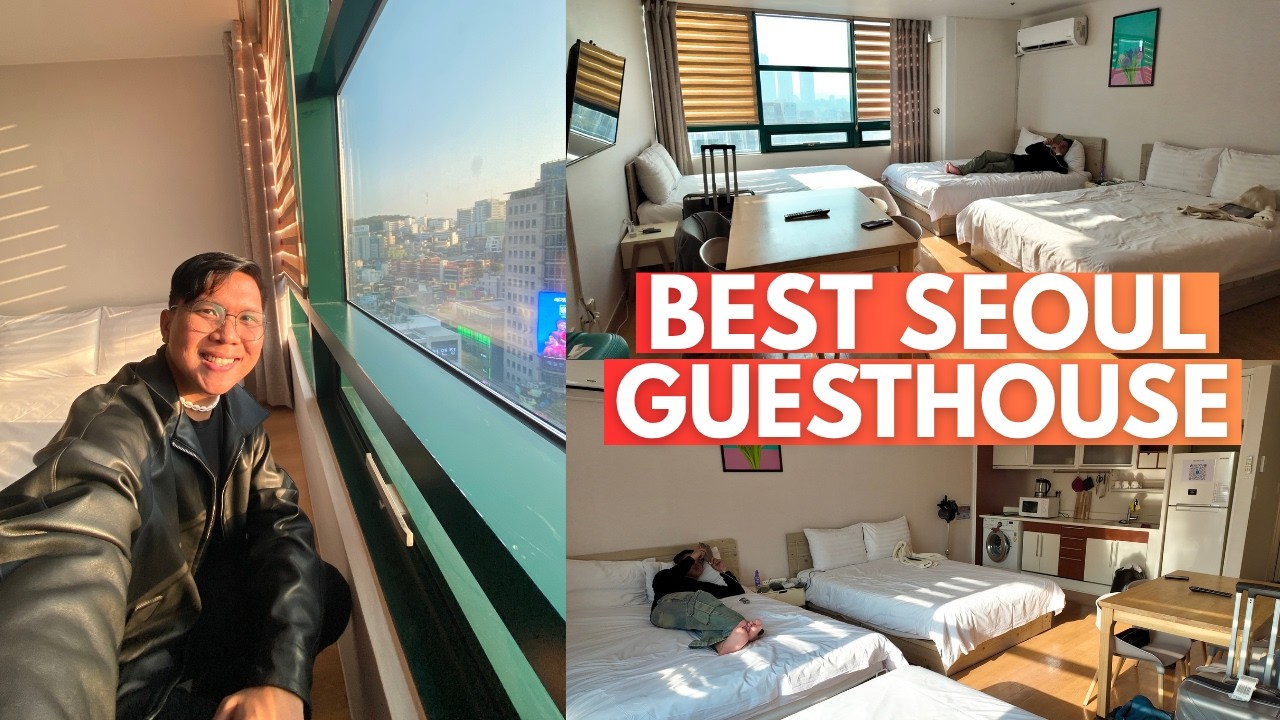
Budget (₩25,000-₩50,000/night)
- Hostels: Shared dorms with 4-8 beds, shared bathrooms
- Guesthouses: Small private rooms, often shared bathroom
- Motels: Basic private rooms with en-suite bathroom (clean but minimal)
Best Areas: Hongdae, Itaewon, Myeongdong
Mid-Range (₩80,000-₩150,000/night)
- Business Hotels: 3-star properties, compact rooms (15-20㎡), private bathroom, basic amenities
- Boutique Hotels: Design-focused, better location, some include breakfast
Best Areas: Myeongdong, Gangnam, Insadong
Luxury (₩250,000+/night)
- 5-Star International Chains: Lotte Hotel, Grand Hyatt, Park Hyatt, Four Seasons
- Premium Hanok Stays: Traditional architecture with modern luxury amenities
Best Areas: Gangnam, Jongno, Hannam-dong
9. Insider Tips to Save Money
1. Join Hotel Loyalty Programs (Even for One Stay)
Many international chains in Seoul (Marriott, Hilton, IHG) offer free Wi-Fi, room upgrades, and late checkout for loyalty members—even if it's your first stay.
Signing up is free and takes 5 minutes.
2. Use Korean Credit Cards for Better Rates
If you have a friend or family member in Korea, ask them to book on your behalf using a Korean credit card. Korean platforms offer exclusive discounts for domestic cardholders.
3. Book Sunday-Thursday for Lower Rates
Weekend rates (Friday-Saturday) are 30-50% higher than weekday rates, especially in areas like Hongdae and Itaewon.
4. Check University Areas During Summer Break
Neighborhoods near universities (Sinchon, Hongdae, Konkuk University) see price drops in July-August when students leave for summer break.
5. Negotiate for Stays Longer Than 7 Nights
For week-long stays, email the hotel directly and request a weekly rate discount. Many hotels offer 10-20% off for extended stays.

10. Common Booking Mistakes to Avoid
Mistake #1: Not Checking Distance to Subway
Seoul is massive. A hotel that looks "centrally located" on a map might be a 20-minute walk from the nearest subway station.
Solution: Use Naver Map to check walking distance to the nearest subway station before booking.
Mistake #2: Assuming All Hotels Have Elevators
Many older buildings in Seoul (especially guesthouses and hanok stays) do not have elevators. If you have heavy luggage or mobility concerns, confirm elevator access before booking.
Mistake #3: Booking Airbnb Without Verifying Legality
Some Airbnb listings in Seoul are illegal short-term rentals that can be shut down by authorities. If this happens during your stay, you could be forced to find alternative accommodation with no refund.
Solution: Only book Superhosts with 50+ reviews and verified listings.
Mistake #4: Ignoring Korean Reviews
International platforms show reviews from other foreigners, but Korean platforms (Naver, Kakao Map) have reviews from locals. Use Google Translate to read Korean reviews—they're often more honest.
Mistake #5: Booking Far from Your Itinerary Focus
If you're visiting Seoul for K-Beauty shopping, stay in Myeongdong. If you're here for nightlife, stay in Hongdae. Don't book Gangnam just because it sounds fancy—you'll waste time and money on transportation.
Comparison Table: Booking Platforms Summary
Joshua's Recommended Booking Strategy (Step-by-Step)
Step 1: Research on Booking.com (Don't Book Yet)
Use Booking.com's filters and reviews to shortlist 5-7 properties in your preferred neighborhood.
Step 2: Cross-Check on Yanolja
Download the Yanolja app and search for the same hotels. Compare prices.
Step 3: Check Direct Hotel Websites
Visit the official website of your top 3 choices. Look for "direct booking" promotions.
Step 4: Email for Long Stays
If you're staying 5+ nights, email the hotel directly and request a discount.
Step 5: Book with Flexible Cancellation
Always choose flexible rates unless your plans are 100% confirmed. The 10-15% savings from non-refundable rates isn't worth the risk.
Step 6: Confirm Everything Before Arrival
48 hours before check-in, email or call the hotel to confirm your reservation, especially if you booked through a Korean platform.
Traveler's FAQ
Q1: Can I use international credit cards on Korean booking platforms?
Yes. Yanolja and most Korean platforms accept Visa, Mastercard, and American Express. However, some smaller guesthouses only accept Korean cards or cash on arrival.
Q2: Is it safe to book motels in Korea?
Yes. Korean motels (모텔) are clean, safe, and budget-friendly. They were historically associated with "love hotels," but most now cater to regular travelers and offer better value than budget hotels.
Q3: Do I need to print my booking confirmation?
It's recommended. While most hotels accept mobile confirmations, having a printed copy (in English and Korean) prevents communication issues at check-in.
Q4: Can I negotiate prices at check-in?
Rarely. Unlike some Southeast Asian countries, walk-in negotiation is uncommon in Seoul. Prices are fixed. Book online in advance for the best rates.
Q5: What if I need to cancel last-minute due to an emergency?
Contact the hotel immediately and explain your situation. Some hotels will waive penalties for medical emergencies if you provide documentation (doctor's note, hospital records).
Author Bio
Joshua is a Seoul-based writer who spent 15 years living in Sydney, Australia. He writes about practical travel logistics, accommodation strategies, and money-saving tips for international visitors navigating Korea's unique booking ecosystem.
Legal Disclosure & Transparency
Image Sources: All images used in this article are sourced from Creative Commons-licensed platforms (Unsplash, Pexels, Wikimedia Commons, Flickr, PickPik, StockSnap) for educational and informational purposes under Fair Use guidelines. All rights belong to the original creators and copyright holders.
Affiliate & Sponsorship Disclosure: This article contains no paid promotions or affiliate links. All booking platform recommendations are based on personal research, traveler feedback, and genuine usability for international visitors. The author receives no compensation from any mentioned platforms or hotels.
Copyright Notice: If you are the owner of any image used in this article and wish to request removal or proper attribution, please contact the author at mieluartekor@gmail.com. We will respond promptly and honor all legitimate requests.


Comments
Post a Comment
"Welcome to KR Snap! Feel free to ask any questions about South Korea or share your thoughts."