If you've spent any time on Seoul's subway, you've witnessed it: an entire train car of people glued to their smartphones in near-total silence. No one talks. No one makes eye contact. Just the soft glow of screens and the rhythmic tapping of thumbs on glass.
To a Western visitor, this can feel eerie—almost dystopian. But to Koreans, being constantly connected isn't antisocial—it's how modern Korean society functions.
I'm Joshua, a Seoul-based writer who spent 15 years in Sydney before returning to Korea. In Australia, smartphone addiction was frowned upon. People prided themselves on "digital detoxes" and "unplugging." When I moved back to Seoul in 2020, I realized that Korean digital culture operates on a completely different paradigm. Here, your phone isn't just a device—it's your lifeline to work, social life, banking, food, transportation, and entertainment.
This guide explores why Koreans are glued to their phones 24/7, the apps that dominate daily life, and the cultural infrastructure that makes Korea one of the most digitally integrated societies on Earth.
Quick View: 3-Line Highlights
📱 Digital Necessity: KakaoTalk replaces SMS/email — if you're not on Kakao, you're socially invisible in Korea
🍕 Delivery Dominance: Order food at 2 AM via Baemin/Coupang Eats and have it delivered in 30 minutes
🤖 Unmanned Everything: Cafes, convenience stores, karaoke rooms—Korea automates what other countries staff
1. KakaoTalk: The App That Runs Korean Social Life
In the West, people use a mix of apps: iMessage, WhatsApp, Facebook Messenger, email. In Korea, there is only KakaoTalk (카카오톡).
Why KakaoTalk Dominates (98% Market Share)
KakaoTalk isn't just a messaging app—it's a digital Swiss Army knife that integrates:
- Messaging: Text, voice, video calls
- Group Chats: Every social circle has a KakaoTalk group (회사 카톡 / work chat, 가족 카톡 / family chat)
- Mobile Payments: Send money instantly via KakaoPay
- Taxi Booking: Call a taxi through Kakao T
- Shopping: Browse and buy products via Kakao Shopping
- Gifts: Send Starbucks coupons, movie tickets, or birthday gifts digitally
Joshua's Real Story:
When I first arrived in Sydney in 2006, Australians used SMS and email. By the time I returned to Seoul in 2020, no one in Korea sends SMS anymore. If you ask for someone's "number," they give you their KakaoTalk ID. If you're not on Kakao, you literally can't participate in Korean social or professional life.
At my first job back in Seoul, my manager said, "Send me a KakaoTalk when you arrive." I had forgotten to install it—and felt like I'd shown up to work without pants.
2. Food Delivery Apps: The 2 AM Lifeline
Korea's food delivery infrastructure is unmatched globally. It's not just about convenience—it's a lifestyle expectation.
The Big Three: Baemin, Coupang Eats, Yogiyo
- Baemin (배달의민족): The market leader with 60%+ share. Known for quirky branding and supporting local restaurants.
- Coupang Eats: Owned by Korea's Amazon-equivalent, Coupang. Fast delivery, loyalty points, and integrated with Coupang WOW membership.
- Yogiyo (요기요): Third-place but still widely used, especially for Korean food.
What Makes Korean Delivery Different:
Joshua's Real Story:
In Sydney, ordering food past 10 PM meant limited options—maybe McDonald's or a kebab shop. In Seoul, I've ordered jjajangmyeon (짜장면) at 2 AM on a Wednesday and had it arrive in 25 minutes. The normalization of midnight food delivery reflects Korea's 24-hour work culture and expectation of instant gratification.
3. Naver Map & Papago: Google's Korean Rivals
Google Maps doesn't work well in Korea—and that's intentional. Korean law restricts detailed map data export for national security reasons, so Google can't provide turn-by-turn navigation here.
Naver Map (네이버 지도): Korea's Google Maps
Naver is Korea's homegrown search engine and tech giant. Naver Map is the default navigation app for locals.
Features:
- Real-Time Public Transit: Subway, bus, walking directions with exact arrival times
- Indoor Maps: Navigate inside department stores, malls, and subway stations
- User Reviews: Integrated restaurant reviews, photos, and ratings
- Street View: Similar to Google Street View but Korea-specific
Papago (파파고): Translation for the Hyperconnected
Owned by Naver, Papago is Korea's answer to Google Translate—but better for Korean-English and East Asian languages.
Why Locals Use Papago:
- Superior Korean-English Translation: More natural phrasing than Google Translate
- Image Translation: Point your camera at Korean text and get instant translation
- Voice Translation: Real-time conversation translation
- Offline Mode: Works without internet for essential phrases
Cultural Insight:
The fact that Koreans develop their own mapping and translation tools instead of relying on Google reflects a broader pattern: Korea builds domestic digital infrastructure tailored to Korean needs, rather than adapting to global platforms.
4. Unmanned Society: Automation Over Human Interaction
Korea is pioneering what I call "unmanned convenience culture"—businesses that operate with minimal or zero human staff.
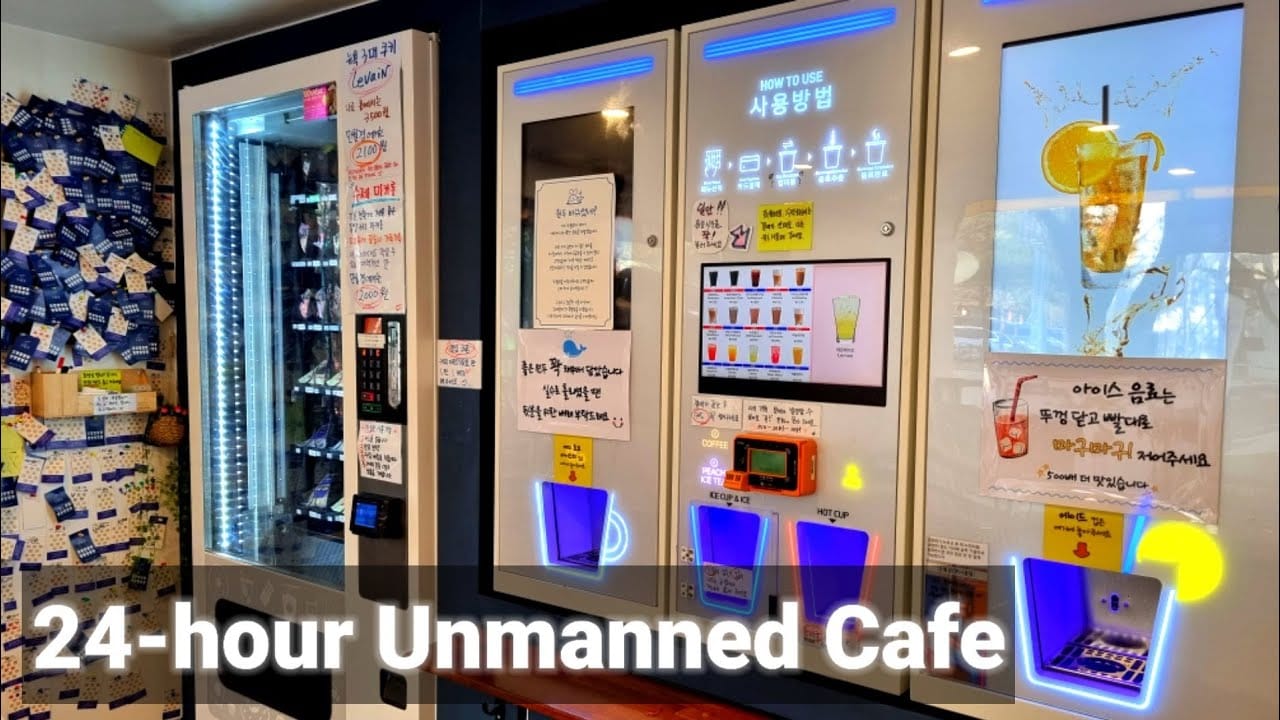
Unmanned Cafes (무인 카페)
Walk into an unmanned cafe, order via touchscreen kiosk, pay with your phone, and a robotic barista prepares your coffee. No human interaction required.
Cost Savings:
- Human-Staffed Cafe: Coffee costs ₩5,000-6,000 (USD $3.50-4.50)
- Unmanned Cafe: Coffee costs ₩2,000-3,000 (USD $1.50-2.25)
Unmanned Convenience Stores (무인 편의점)
Major chains like CU and GS25 have opened unmanned locations where customers scan items with their phones and pay via app—no cashier needed.
How It Works:
- Download the store's app (CU Pocket, GS25 App)
- Enter the store by scanning a QR code
- Pick up items—cameras track what you take
- Walk out—payment is automatically charged to your linked card

Joshua's Real Story:
In Sydney, self-checkout at supermarkets was optional—many people still preferred human cashiers for the social interaction. In Korea, unmanned stores are seen as the future. The emphasis is on efficiency, not human connection. When I first used an unmanned CU, I felt uncomfortable—but within weeks, I preferred it. No small talk. No waiting. Just grab and go.
Unmanned Karaoke (무인 노래방 / Coin Noraebang)
Traditional noraebang (노래방 / karaoke rooms) have staff who manage bookings and collect payment. Coin noraebang are fully automated—you pay per song (around ₩500 / USD $0.35), enter a private booth, and leave when you're done.
5. Mobile Banking & Digital Payments: Cash Is Dying
Korea is rapidly becoming a cashless society. Mobile payments now account for over 70% of retail transactions.
The Big Players:
- KakaoPay (카카오페이): Integrated into KakaoTalk—send money, pay bills, invest in stocks
- Naver Pay (네이버페이): Linked to Naver services—shopping, dining, transport
- Toss (토스): Digital-only bank with instant transfers, no fees
- Samsung Pay / Apple Pay: Widely accepted, especially at chain stores
QR Code Culture:
Restaurants, markets, and even street vendors now accept QR code payments. You scan their code with your banking app, enter the amount, and pay instantly.

Joshua's Real Story:
In Australia, cash was still common as of 2020—especially at small cafes and markets. When I returned to Seoul, I realized cash had become almost obsolete. I once tried to pay cash at a trendy Gangnam cafe, and the barista looked at me like I'd handed her a stone tablet. "Card only," she said apologetically.
6. Why the Subway Is So Quiet: The Unspoken Rule
Korean subway culture is defined by silence. Unlike New York, London, or Sydney, where people chat freely on trains, Seoul's subway is a library.
Why No One Talks:
- Respect for Others: Talking loudly is seen as inconsiderate in public spaces
- Exhaustion: Many commuters are returning from long workdays and prefer solitude
- Phone Absorption: Everyone is watching videos, playing games, or messaging on KakaoTalk with earbuds in
What They're Doing on Their Phones:
- Watching Content: YouTube, Naver TV, Webtoons (웹툰 / digital comics)
- Gaming: Mobile games like Lineage M, MapleStory M
- Messaging: Group chats on KakaoTalk
- Shopping: Scrolling through Coupang, 11번가 (11st), or Naver Shopping
Cultural Comparison:
On Sydney trains, strangers might strike up conversations. In Seoul, making eye contact is avoided. The phone acts as a social shield—a signal that you're occupied and not available for interaction.
7. The Dark Side: Digital Burnout and FOMO Culture
Korea's hyperconnectivity has a cost. Constant availability creates social pressure and burnout.
KakaoTalk Anxiety
- Read Receipts: You can see when someone has read your message—ignoring it is obvious
- Group Chat Pressure: Missing a work group chat message can have real consequences
- "1" Badge Stress: That little "1" notification badge haunts Koreans until they clear it
Always-On Work Culture
Because everyone has KakaoTalk, the line between work and personal time blurs. Bosses message late at night. Colleagues expect instant responses. "Digital detox" is nearly impossible when your entire social and professional network runs through one app.
Joshua's Real Story:
In Sydney, work emails stopped at 6 PM. In Seoul, I've received KakaoTalk messages from my manager at 11 PM on a Saturday asking about a Monday deadline. The expectation isn't rude—it's just how things work. You're always reachable, always responsive, always connected.
8. Seoul vs. Sydney: Digital Culture Comparison
Takeaway:
Korea has leapfrogged into a digital-first society where phones aren't just tools—they're essential infrastructure.
Traveler's FAQ
Q1: Do I need a Korean phone number to survive in Seoul?
Not essential, but highly recommended. Many apps (KakaoTalk, Naver, delivery apps) require Korean phone verification. You can get a prepaid SIM at the airport.
Q2: Can tourists use KakaoTalk without a Korean number?
Yes, but with limitations. You can use it with a foreign number, but some features (KakaoPay, taxi booking) require Korean verification.
Q3: Why don't Koreans use WhatsApp or Telegram?
KakaoTalk got there first (launched 2010) and achieved total market saturation before competitors entered. Network effects locked everyone in.
Final Thoughts: Hyperconnectivity as National Infrastructure
Korean smartphone culture isn't just a quirk—it's a reflection of how Korea built its modern economy. The country prioritized digital infrastructure over physical convenience. Why staff a cafe when a robot can do it? Why carry cash when your phone can pay? Why memorize subway routes when Naver Map knows them better?
When I lived in Sydney, being on your phone constantly was seen as rude. In Seoul, not being on your phone makes you inefficient. You can't work, socialize, navigate, eat, or pay without it.
This hyperconnectivity comes with trade-offs—burnout, social isolation, and the erosion of work-life boundaries. But it also enables a level of convenience and efficiency that most countries can't match.
For foreigners visiting Seoul, don't judge the silence on the subway or the constant phone use. Understand that in Korea, the phone isn't a distraction—it's the operating system for daily life.
Legal Disclosure & Transparency
Image Sources:
Images in this post are sourced from copyright-free platforms (Pexels, creative commons) or generated using AI technology for illustrative purposes. No endorsement by original creators is implied. If you are a rights holder and wish to have an image removed, please contact Joshua at mieluartkor@gmail.com for prompt removal.
Affiliate & Transparency Notice:
This blog may contain affiliate links or references to commercial services. KR Snap may earn a small commission from bookings or purchases made through these links at no additional cost to you. All recommendations are based on genuine research and local expertise. No brands mentioned in this article paid for placement.


Comments
Post a Comment
"Welcome to KR Snap! Feel free to ask any questions about South Korea or share your thoughts."